The Baghdad Bazaar Bulletin
Read More: Ask Gladys Archive
You can find the latest"Ask Gladys" installment on our Ask Gladys page. To ask a question of your own, click Contact Us.
Read past installments from Miss Gladys Cailiff in their entirety below--or get the whole story by ordering a copy of the published book in which she tells all.
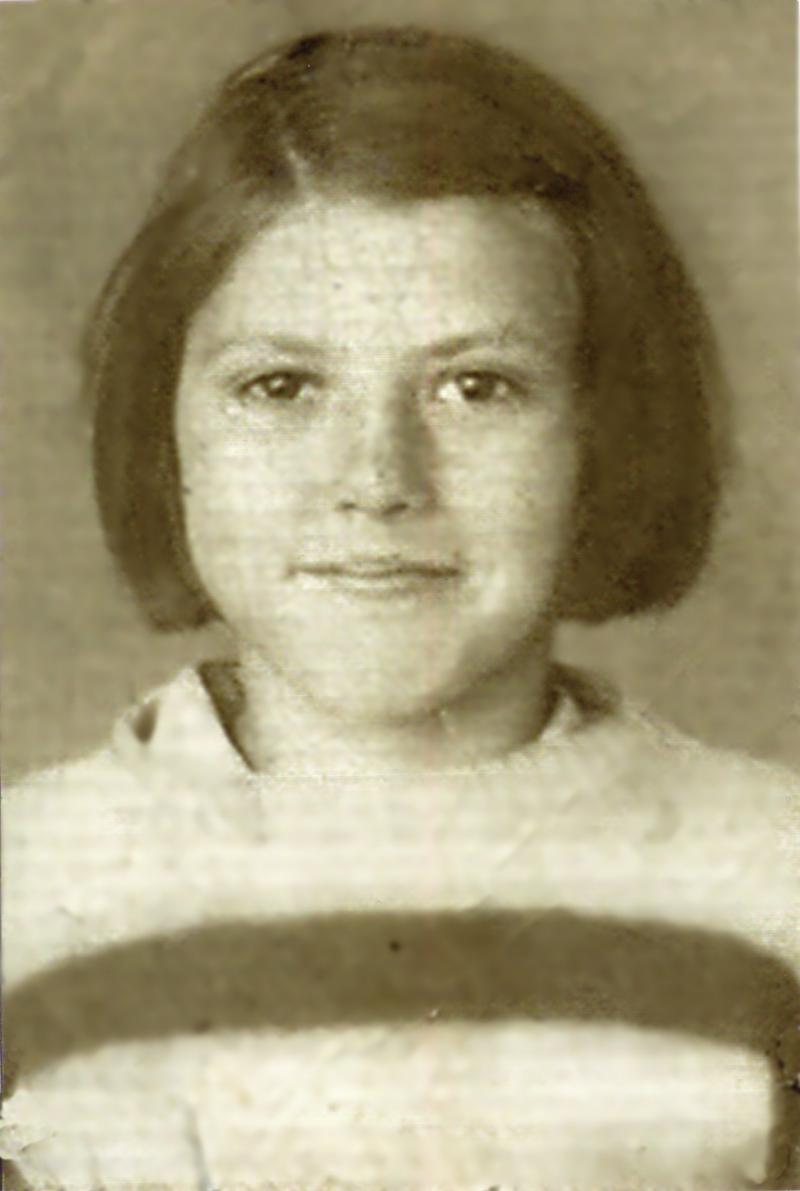
TYRONE POWER, JR., & THE BAGHDAD BAZAAR
Several of you have asked how come there’s a picture of Tyrone Power, Jr., in our Photo Gallery. First off, no, Tyrone Power never did attend the Baghdad Bazaar, although that is not to say that we’ve never had any famous people show up in Baghdad on the second weekend in June. The best way to explain his picture is by telling you about a certain field trip our teacher Miss Spivey took us on back in 1938.
I don't recall by what means we got to Claytonville the time Miss Spivey took us to the Dixie Way Theater to see Suez, starring Tyrone Power, Jr. It had to be early in the school year because it was still hotter than blazes outside, and the Dixie Way was newly air-conditioned. By the time the picture was over, I wished I had a sweater. In Suez, which Miss Spivey wanted us to see for historical purposes, Tyrone Power plays Ferdinand de Lesseps, the Frenchman who built the Suez Canal. He does a lot of standing around in the desert wearing tight pants tucked into knee-high boots, with one of those little veils that Arab men wear fluttering around his shoulders. My brother Force was with us that time, Lord knows how or why. He and Ralphord and Arnie Lumpkin's little sister Alma happened to be sitting in the row right in front of me and Miss Spivey. When Force turned his head to ask Ralphord and Alma to kindly pipe down at the very same moment that Tyrone Power turned his head to gaze out over the desert up on the screen, putting him sort of nose-to-nose with my brother Force, I heard Miss Spivey take a sharp little breath.
After the picture was over, she asked me, quietly, if I noticed a resemblance between Tyrone Power and my brother Force, and I said, yes, ma'am, I surely did. Everybody did, ever since we saw Ladies in Love, which was Tyrone Power’s first picture. To be fair, my brother strongly favored our daddy also, who was a handsome man in his own right. Both Force and Daddy had the square jaw and the lovely mouth--that's the only word for Mr. Tyrone Power's mouth, which looked like it could turn your heart one way or the other without saying a single word--but my brother also had the wavy black hair and dark eyebrows, one of them always pointed like a little tent over one or the other of his blue, blue eyes. Both Force and our daddy were quick to smile, easy to laugh. About Tyrone Power's disposition, I don't know.
As I recall, Force didn't care all that much for Suez. When Miss Spivey asked him what he thought about the picture while we waited out on the sidewalk for our ride, Force said, in an effort to be diplomatic, "Do the men"--he meant the Arabs--"still wear them dresses like that over there?"
Miss Spivey told him that loose robes were the most sensible way to dress in a climate where the temperature routinely reached 120 degrees--in the shade, if you could find any--and that if he ever found himself in the Arabian desert, she guessed that he would happily exchange his shirt and long pants for one of those "dresses." It was kind of an odd moment when she said that, everybody staring at her and Force, and all of us probably doing exactly what I was doing in my head, which was picturing my brother in a long robe with his handsome face and blue eyes looking out from under one of those fluttery veils and maybe wondering, too, why he was here with us and not at school in Milledgeville. I believe that may have been the moment when Miss Spivey first conceived of the Baghdad Bazaar as a kind of Arabian pageant with costumes, starring my brother Force in a role that would require him to take off his shirt and long pants and slip into something more comfortable.
CAILIFFS & THE GIRL FROM QATAR
Here's a word for you all: Cailiff.
It's my name and has been for all of my 82 years thus far. Gladys Cailiff.
Here's another word: Caliph.
Maybe you already know what it means--maybe you've read all 1,001 of the Arabian Nights and you know what "caliph" means about as well as you know your name--but I'm going to tell you anyway, just in case. It means the ruler of old-time Baghdad, also known as the Commander of the Faithful and the Slave of God and a pile of other titles and names I won't go into right now.
Say them out loud: Cailiff. Caliph. Hear the difference?
That's because there isn't any difference.
Unless you're my brother Ralphord, in which case you still think “Caliph” must be Kay-lip--and never mind there's a PH right in the middle of your own name, which is NOT and never has been Ral-Perd. Or unless you hail from an Arab land yourself, and in that case, you'd likely be calling me Gladys Kah-LEAF, like that girl from Qatar did when she came to town for the Baghdad Bazaar. It was one of my sister May’s granddaughters that brought her, the one who changed her name from Betsy to Bette (with a silent e). Betsy—I mean to say, Bette—came home from school in Atlanta in the 1970s and told us how we were being disrespectful to the Arabs, their culture and religion, especially with the kid in the minaret, singing. She didn't like the harem on stage with the Sultan either, but for different reasons. Mavis Davis Bonner was bazaar coordinator that year. She pointed out to young Bette that we were just borrowing some from the Arabian people because we admired their culture, but Bette said, "They're Arab people, not Arabians! That's just what I mean, Mrs. Bonner."
To prove her point, Bette came back home for Baghdad Bazaar weekend that year--it might have been 1973 or ’74-- with a friend she met at college who was from a little Arab country called Qatar, expecting this girl to set us straight. But it turned out Bette’s friend from Qatar just plain out loved the Baghdad Bazaar. She dunked the County Sheriff in the Dunk Tank twice in a row for starters, having pitched softball at summer camp every year since she was ten. In fact, that girl from Qatar got such a kick out of the whole thing that she spent a whole day painting beautiful Arabic letters on our various signs and around the archways and the minaret and such, which gave everything a really authentic look. Arabic letters, I noticed she said. They spelled out things like "Welcome to Baghdad, Georgia," and "Three balls for a quarter." It was something to watch her paint them on there backwards, from right to left.
WHAT HAPPENED TO THE SIGNS?
Mr. Occam Razor (not, he says, his real name) attended the Baghdad Bazaar in the late 1990s when he was stationed in Columbus, Georgia, and he wrote in to say that he never saw any Arabic letters on our signs and arches such as I described previously. He asks: What happened to them?
As I mentioned in the first installment (click here to read it), my grandniece Bette brought a girl from Qatar to the Baghdad Bazaar back in 1973. At the time, young Bette felt that we were being disrespectful to the Arabs, with our minaret and all, and I believe she was hoping her college friend from Qatar would be offended, too, but that girl had nothing but a good old time. She’s the one who painted the signs in Arabic that used to say “Three balls for a quarter,” and the like.
Bette got in one last parting shot, however, by asking us, while her friend from Qatar was putting her bag in the car to go back to college in Atlanta, how we knew that the necklace of Arabic letters added to our minaret didn't say we were all "pig-eating Nazarenes" or something like that. (Bette knew very well that none of us would be so rude as to accuse her friend of lying about what she said she'd written.)
That seed of doubt got planted just deep enough so that every year thereafter, when we brought out the minaret and all to freshen up the paint, there was always somebody who wanted to cover over the lovely Arabic letters. Every year, we would say how we ought to call up to the college and see if there was a professor or somebody who could take a look at our signs and tell us exactly what they said, but every year we decided that was more trouble than it was worth, since nobody was likely to come down from Atlanta or Athens or even over from Milledgeville to see, which meant that we'd have to take pictures, or copy the letters, and nobody was volunteering to do that. Proposing to find somebody to read the signs and then deciding it was too much trouble became a regular agenda item at the first meeting of the Baghdad Bazaar planning committee every January until 1991, when the committee voted unanimously to paint over all the Arabic writing (even the words that our own Theo Boykin wrote on the main gate so many years ago). I was on the committee that year myself, so I can tell you for a fact that our unanimous vote was a compromise to prevent canceling the Bazaar altogether that year, and selling off the camels, if you can believe that.
Copyright 2015 The Baghdad Bazaar Bulletin . All rights reserved.